


From Award Winners to “AI Slop”: The Great Generative AI Reckoning of 2025
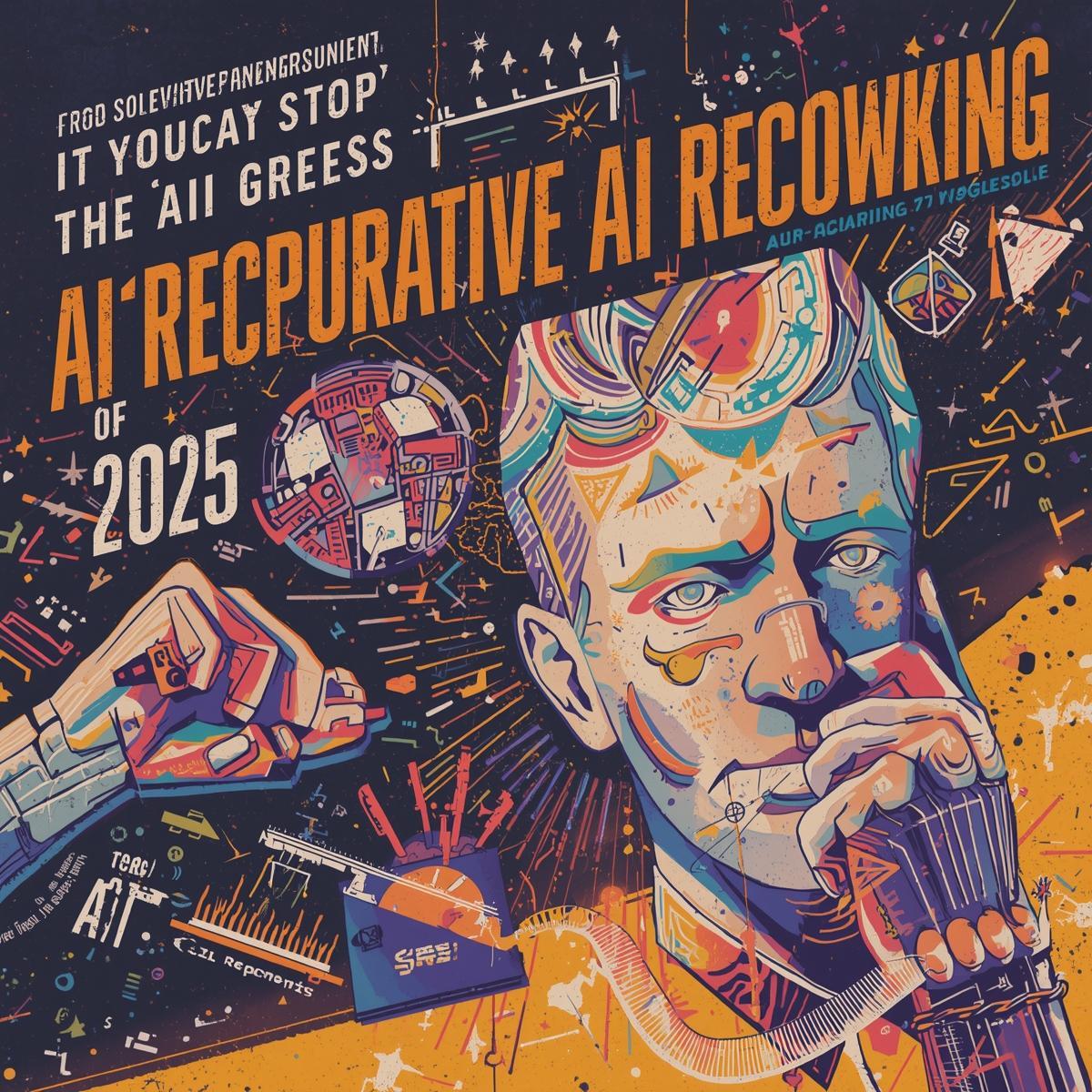
In the annals of gaming history, 2025 will be remembered not for its technological leaps, but for its cultural whiplash. What began as a celebration of innovation quickly spiraled into a reckoning—a moment when players, developers, and critics collectively asked: Is this what we signed up for?
The year’s most dramatic flashpoint came when Clair Obscur: Expedition 33, a visually stunning turn-based RPG from Sandfall Interactive, was stripped of its Indie Game Awards accolades. The game had swept nine trophies at The Game Awards, but its victory was short-lived. After revelations that placeholder textures were generated using AI tools, the Indie Game Awards rescinded its Game of the Year and Debut Game honors, citing a “hard stance” on generative AI.
This wasn’t just a scandal—it was a signal.
The Rise and Fall of AI-Assisted Development
Generative AI had been hailed as a game-changer. Studios could produce assets faster, iterate on environments with minimal human input, and reduce costs. But as 2025 unfolded, the cracks in that promise became impossible to ignore.
Call of Duty: Black Ops 7, one of the year’s most anticipated releases, faced a barrage of criticism for its campaign visuals. Players accused the game of relying on AI-generated environments that felt soulless, repetitive, and disconnected from the franchise’s gritty legacy. Reviewers described the experience as “scathing,” with one calling it “a masterclass in how not to use AI in storytelling.”
The term “AI slop” entered the gamer lexicon—used to describe games that felt algorithmically assembled, devoid of human touch, and emotionally hollow.
Human Artistry vs. AI Efficiency: The Core Debate
At the heart of the backlash was a philosophical divide. On one side stood proponents of generative AI, arguing that efficiency and scalability were essential in an industry where budgets ballooned and timelines shrank. On the other, a growing chorus of artists, players, and indie developers insisted that games are art, and art demands intention, emotion, and imperfection.
Gamers began scrutinizing storefronts for “AI-Free” labels, a grassroots movement that mirrored organic food certifications. Forums lit up with discussions about which titles were “hand-crafted” versus “machine-assisted.” Developers who proudly declared their games “100% human-made” saw spikes in downloads and community support.
Indie Games: The Unexpected Heroes
While AAA studios stumbled, indie developers thrived. Titles like Inkbound Realms, Echoes of the Loom, and Fablelight—all created with traditional tools and hand-drawn assets—captured hearts and headlines. These games didn’t boast photorealism or procedural generation. Instead, they offered soul.
Players praised the imperfections: uneven brush strokes, quirky animations, and dialogue that felt personal. These weren’t bugs—they were fingerprints.
The success of these games proved a powerful point: authenticity resonates. In a year dominated by AI discourse, the most beloved titles were those that embraced human creativity.
The Industry’s Response: Retreat or Reinvention?
Faced with mounting pressure, some studios doubled down on transparency. Ubisoft launched a “Creative Integrity” initiative, pledging to disclose AI usage in all future titles. Steam introduced optional AI-content tags, allowing users to filter games based on development methods.
Others quietly pivoted. Studios that had heavily invested in generative pipelines began rehiring artists, animators, and writers. Job boards saw a resurgence in listings for concept artists and narrative designers—roles that had been threatened by automation just a year prior.
Cultural Fallout: More Than Just Games
The generative AI reckoning wasn’t confined to gaming. It rippled across digital art, music, and even literature. Online communities like ArtStation and DeviantArt saw mass protests against AI-generated content. Musicians pushed back against AI-composed tracks flooding streaming platforms. Writers demanded clearer labeling on AI-assisted novels.
In every corner of digital creativity, the message was clear: we value the human touch.
What Comes Next?
2025 may have been the year of reckoning, but it also laid the groundwork for a renaissance. Developers are rethinking pipelines. Players are demanding transparency. And the industry is beginning to understand that efficiency without emotion is a losing game.
Generative AI isn’t going away. But its role is being redefined—not as a replacement for human creativity, but as a tool that must be wielded with care, ethics, and respect for the craft.
As we look ahead, one thing is certain: the future of gaming will be shaped not just by what we can automate, but by what we choose to preserve.

 English
 Arabic
 French
 Portuguese
 Deutsch
 Turkish
 Dutch
Dutch
 Italiano
 Russian
 Romaian
 Portuguese (Brazil)
 Greek
Greek
