


Financial Independence & the FIRE Movement: Your Guide to Early Retirement in 2026
Introduction
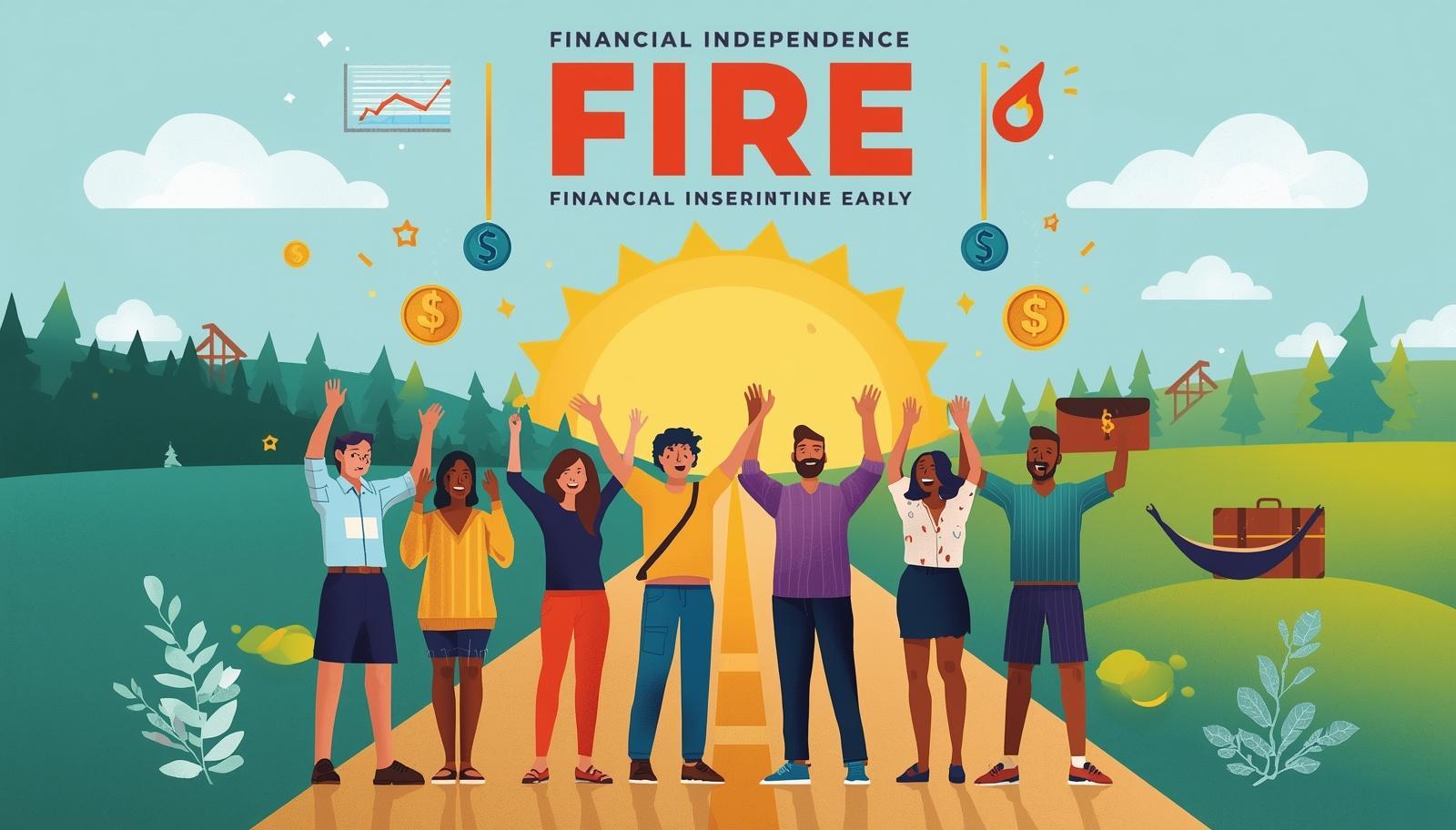
Imagine waking up without the pressure of a 9‑to‑5 job, with the freedom to spend your time on family, travel, or passion projects. That’s the promise of the FIRE movement (Financial Independence, Retire Early). In 2026, FIRE has become more than a niche idea—it’s a global lifestyle revolution.
This article explores what FIRE is, why it matters today, strategies to achieve it, and whether it’s right for you.
1. What Is the FIRE Movement?
The FIRE movement is a financial strategy and lifestyle philosophy designed to help individuals retire decades earlier than the traditional retirement age. It focuses on:
-
Aggressive saving (50–70% of income).
-
Smart investing in stocks, real estate, and passive income streams.
-
Frugal living to minimize expenses.
-
Financial independence—the ability to live without relying on a paycheck.
At its core, FIRE is about freedom, not deprivation.
2. Why FIRE Is More Relevant in 2026
Several global trends have made FIRE increasingly popular:
-
Economic uncertainty: Rising inflation and unstable job markets push people to seek financial security.
-
Remote work culture: Flexibility has become a priority, and FIRE aligns with that lifestyle.
-
Technology & AI: Robo‑advisors, fintech apps, and AI‑driven investment tools make FIRE strategies easier to implement.
-
Minimalism & sustainability: Younger generations value freedom and experiences over material possessions.
3. Core Principles of FIRE
a. High Savings Rate
The foundation of FIRE is saving aggressively. Many FIRE followers save 50–70% of their income.
b. Smart Investing
-
Index funds & ETFs for long‑term growth.
-
Real estate for rental income.
-
Dividend stocks for steady cash flow.
c. Frugality & Lifestyle Design
-
Cut unnecessary expenses.
-
Focus on experiences, not possessions.
-
Relocate to lower‑cost areas (geo‑arbitrage).
d. Passive Income Streams
-
Digital products (courses, eBooks).
-
Affiliate marketing.
-
Rental properties.
-
Dividend portfolios.
4. Types of FIRE
-
Lean FIRE: Extreme frugality, living on minimal expenses.
-
Fat FIRE: Comfortable lifestyle with higher spending.
-
Barista FIRE: Semi‑retirement with part‑time work.
-
Coast FIRE: Save aggressively early, then let investments grow.
5. Step‑by‑Step Guide to Achieving FIRE
Step 1: Define Your FIRE Number
Your FIRE number = 25 × annual expenses (based on the 4% rule). Example: If you spend $30,000/year → $750,000 needed.
Step 2: Track Expenses
Use apps like Mint, YNAB, or Excel templates.
Step 3: Increase Income
-
Side hustles (freelancing, consulting).
-
Career advancement.
-
Passive income streams.
Step 4: Cut Expenses
-
Eliminate debt.
-
Reduce housing costs.
-
Cook at home, limit subscriptions.
Step 5: Invest Aggressively
-
Index funds (S&P 500, global ETFs).
-
Real estate.
-
Dividend stocks.
Step 6: Protect & Diversify
-
Emergency fund (6–12 months).
-
Insurance (health, property).
-
Diversify across asset classes.
6. FIRE in Ghana & Africa (Localized Angle)
For readers in Ghana and Africa, FIRE strategies adapt to local realities:
-
Mobile money savings (MTN MoMo, Vodafone Cash).
-
Local investment opportunities (treasury bills, real estate).
-
Community living reduces costs.
-
Agriculture & land ownership as long‑term wealth.
This localized approach makes FIRE achievable even in economies with different structures than Western markets.
7. Pros & Cons of FIRE
✅ Pros
-
Freedom from 9‑to‑5 jobs.
-
More time for family, travel, hobbies.
-
Reduced stress and burnout.
-
Ability to pursue passion projects.
❌ Cons
-
Requires extreme discipline.
-
Social pressure (friends/family may not understand).
-
Market risks (investments may underperform).
-
Healthcare costs in early retirement.
8. Common Myths About FIRE
-
Myth 1: Only high earners can achieve FIRE.
-
Truth: Even average earners can succeed with discipline.
-
Myth 2: FIRE means never working again.
-
Truth: Many pursue passion projects or part‑time work.
-
Myth 3: FIRE is about deprivation.
-
Truth: It’s about intentional spending and freedom.
9. Case Studies & Examples
Case Study 1: Lean FIRE Success
A young professional in Accra saved 60% of income, invested in index funds, and achieved Lean FIRE by age 35.
Case Study 2: Fat FIRE in the U.S.
A couple earning six figures invested in real estate and dividend stocks, retiring at 45 with a comfortable lifestyle.
Case Study 3: Barista FIRE in Europe
A teacher saved aggressively, retired early, but continues part‑time tutoring to cover healthcare costs.
10. FAQs
-
What is the FIRE movement in finance?
-
How much money do you need to retire early?
-
Is FIRE realistic in Ghana or Africa?
-
What are the risks of early retirement?
-
Can side hustles help achieve FIRE?
11. Conclusion
The FIRE movement is more than a financial strategy—it’s a lifestyle revolution. By saving aggressively, investing wisely, and living intentionally, you can achieve financial independence and retire decades earlier than traditional norms.
Whether you choose Lean FIRE, Fat FIRE, or Coast FIRE, the key is consistency, discipline, and a clear vision of the life you want.

 English
 Arabic
 French
 Spanish
 Portuguese
 Deutsch
 Turkish
 Dutch
Dutch
 Italiano
 Russian
 Romaian
 Portuguese (Brazil)
